The Real Reasons You’re Not Losing Weight

Using the secret awesome supplements, fat burners, shakes, and other “scientifically proven” stuff that your trainer/TV doctor said to use. But for some strange reason, you just can’t seem to lose any weight?

Your app says you’re eating 1200 calories a day. The online metabolism calculator says that you’re burning 2000 calories a day. You’re even using the secret awesome supplements, fat burners, shakes, and other “scientifically proven” stuff that your trainer/TV doctor said to use. But for some strange reason, you just can’t seem to lose any weight. How can this possibly be?!?! Well, let me tell you a dirty little secret. Most of that stuff can be summed up in one word. Crap. Because if any of this sounds familiar to you, you’re not losing body fat because in one way or another, whether you realize it or not, you’re eating more than you think are even when you think you aren’t.
 
Calories In
Nutrition tracking is great because it can give you a sense of how many calories you’re eating within a given food, meal, day, etc. However, when it comes to tracking nutrition, the energetic content of food has been completely divorced from the energetic cost of food. Meaning, the tracker won’t take into account how many calories will be burned preparing the food and/or digesting the food. Additionally, your tracker may not always be counting correctly. For instance, I have seen examples on my tracker where the calorie count is identical for 4oz and 8oz portions of the same foods. So even if you use a scale to weigh and meticulously record you food stuffs, you could still end up being way off. In fact, on average people, even after being well educated on how to track their food, will under estimate their intake by 429 calories per day (1).That’s about 3,000 calories per week! That’s not to say tracking calories is not worth your while. Because when you’re not paying attention to calorie intake, you leave yourself open to all the environmental and cognitive factors that have you eating more and more without even realizing it. For the most part, your brain is to blame for all of this. So, set your brain up for success to decrease the amount you eat.
 
Inline image 2
 
Calories Out
You take out your phone at the end of a long day and see that you have walked almost 10.000 steps. You say to yourself, “not a bad day’s work! No need for the gym tonight.” But, of course this is a huge mistake. For starters, everyone should be exercising in some fashion just about everyday. Regardless of age, gender, or health concerns, there are guidelines that you should follow for your exercise routine. The operative word being routine. Not a “when I feel like it” mentality. Secondly, there really is no great way to measure your steps, or for that matter, your calorie output. Even the most expensive and popular brands of trackers routinely under-estimate your steps while over-estimating your calorie expenditure (2). If you truly want to know how many calories you’re using in a day, you will need to be hooked up to some expensive machinery (see picture bellow for details). But you better not plan on using that number forever. Your calorie usage changes on a daily basis for many reasons. And as you lose weight, your body will almost cruelly reduce the number of calories it burns. Because as you become leaner, this ‘leanness’ means your body doesn’t require as many calories to keep you alive.
 
Inline image 1
Beware The Guru
By now most of you know that I don’t enjoy the works of certain health and fitness “gurus.” Not only that, but I don’t really believe that the works of many supplement companies are quite ethical. With everyone craving instant results, the immoral take advantage of this fact despite knowing there is no way they can deliver. They make fads something to profit off of rather than actually help people and guide them to success in their goals. They try to get you to buy into their way of thinking, so it makes it harder for you to dig yourself out of their profit pit. They use fear mongering to get their way and make your pocketbook lighter. And while it certainly is commendable that you want to do something to make yourself healthier, I would like to share with you some money saving and health enhancing factsFat burning supplements won’t help you lose weight but can be dangerous (3). Vitamin supplements and detoxes are a waste of money (4). And cutting fat is just as effective as cutting carbs to lose fat mass (5). Diet soda is actually a good tool to help you lose weight and to that end, there are no negative side effects of consuming artificial sweeteners (6). And the likes of TV doctors and Men’s Health magazine leave much to be desired when it comes to good advice (7,8)
 
Inline image 3
 
Instead of focusing on instant gratification, remember that anything worth having is going to take time, hard work, and persistence. Instead of searching for motivation all the time, learn why motivation is unreliable and what you should do instead. Remember that any diet suggesting you remove entire food groups, or slash your calories drastically doesn’t have your best interests in mind. There’s no long-term play here. Finally, ask yourself “are there any beliefs you hold that you might need to let go in order to attain better results?”
References
1. Champagne, C. M., Bray, G. A., Kurtz, A. A., Monteiro, J. B. R., Tucker, E., Volaufova, J., & Delany, J. P. (2002). Energy intake and energy expenditure: A controlled study comparing dietitians and non-dietitians. Journal of the American Dietetic Association, 102(10), 1428-1432. doi:10.1016/S0002-8223(02)90316-0
2. NELSON, M. B., KAMINSKY, L. A., DICKIN, D. C., & MONTOYE, A. H. K. (2016). Validity of consumer-based physical activity monitors for specific activity types. Medicine & Science in Sports & Exercise, 48(8), 1619-1628. doi:10.1249/MSS.0000000000000933
3. Dara, L., Hewett, J., & Lim, J. K. (2008). Hydroxycut hepatotoxicity: A case series and review of liver toxicity from herbal weight loss supplements. China: The WJG Press and Baishideng. doi:10.3748/wjg.14.6999
4. Guallar, E., Stranges, S., Mulrow, C., Appel, L. J., & Miller, 3., Edgar R. (2013). Enough is enough: Stop wasting money on vitamin and mineral supplements. Annals of Internal Medicine, 159(12), 850.
5. Hall, K. D., Bemis, T., Brychta, R., Chen, K. Y., Courville, A., Crayner, E. J., . . . Yannai, L. (2015). Calorie for calorie, dietary fat restriction results in more body fat loss than carbohydrate restriction in people with obesity. Cell Metabolism, 22(3), 427. doi:10.1016/j.cmet.2015.07.021
6. Peters, J. C., Wyatt, H. R., Foster, G. D., Pan, Z., Wojtanowski, A. C., Vander Veur, S. S., . . . Hill, J. O. (2014). The effects of water and non‐nutritive sweetened beverages on weight loss during a 12‐week weight loss treatment program. Obesity, 22(6), 1415-1421. doi:10.1002/oby.20737
7. Korownyk, C., Kolber, M. R., McCormack, J., Lam, V., Overbo, K., Cotton, C.. . Allan, G. M. (2014). Televised medical talk shows–what they recommend and the evidence to support their recommendations: A prospective observational study. BMJ (Clinical Research Ed.), 349(dec17 11), g7346-g7346. doi:10.1136/bmj.g7346
8. Cook, T. M., Russell, J. M., & Barker, M. E. (2014). Dietary advice for muscularity, leanness and weight control in men’s health magazine: A content analysis. BMC Public Health, 14(1), 1062-1062. doi:10.1186/1471-2458-14-1062
Getting Grilled

“5 reasons why grilling will kill you”… What?

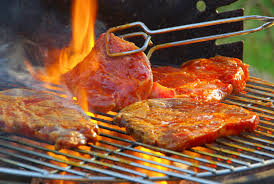
Some time back I stumbled upon a blog condemning the grill saying something along the lines of “5 reasons why grilling will kill you”. Naturally my mind went to using too much lighter fluid causing an explosion so I clicked the link to see what fun ways I could hurt myself this weekend. However, to my dismay the article was about how grilling can cause cancer, and that anyone who uses a grill is at harm and would be better off throwing out their cooking device.
Well I can say that as a lifelong lover of anything bacon, steak, and BBQ related I quickly made it my mission to find out if I should consult an oncologist, or if Memorial Day weekend plans were safe (grilling, home made beer, and Frisbee btw). Well I can safely say that I will be spending my afternoon savoring the sweet sweet smell of venison and Mae farm pork sausage.
I found most of the information on the subject in peer reviewed literature, but today’s post mostly comes from the fine folks at Precision Nutrition. Here is what you need to know:
– Grilling meat does produce a couple of chemicals that may increase risk of cancer (HCA & PAH
– Heterocyclic amines (HCAs) form when meat is overcooked or charbroiled
-Four factors influence HCA formation: 1. Type of food 2. How it’s cooked 3. Temperature 4. How long it’s cooked
– Polycyclic aromatic hydrocarbons (PAHs) form when meat is charred or blackened, or when fat from the meat drips onto the hot surface of the grill.
– PAH creation is influenced by: 1. Temperature of cooking 2. How long food is cooked 3. Type of fuel used in heating 4. Distance from heat source 5. Fat content of the food
– How to make grilling healthier: 
1. Use herbs and spices
2. Acid-based marinades Beer marinades work, too!!!
3. Don’t overcook HCAs and PAHs depend on temperature plus time.
4. Choose meat wisely. Highly-processed meats have a much stronger link to cancer than less-processed meats.
5. Include lots of fruits and veggies
6. Strategize while cooking i.e. Cut your meat into smaller pieces, Flip meat frequently, Cook meat on medium to medium-high heat, Cover the grill with foil.
7. And my FAVORITE drinking a beer with your grilled meat can significantly lower the mutagenic activity of the HCAs that formed.
The author of the PN article, Brian St. Pierre, sums things up extremely well when he says “Keep the risks in perspective. Overall, HCAs and PAHs make a minor contribution to your cancer risk. Being sedentary, having excess body fat, and eating a diet rich in highly processed foods are much greater risk factors. If you have some slow-cooked, pit-roasted ribs in your life once in a while, you’ll probably survive. (And likely be happier overall. Don’t be afraid of your food.)” Have a fun and safe holiday weekend, and say a prayer (or take a moment of silence) in remembrance of those who have fallen for our nation.

The Best Signs Of Progress Don’t Include Your Weight!

Physical and mental signs of improvement that make the scale irrelevant!

I can get anyone to lose 5 pounds with one simple trick. I put them in a steam room for an hour and don’t allow them to drink anything! But of course, for most people, that’s not  the point of losing weight. This simple fact begs the question, if losing water weight isn’t the end goal, then does what the scale says even matter? Our weight fluctuates to a dramatic degree throughout the day based on all sorts of things. Are you hydrated?  Did you use the bathroom recently? Have you eaten yet? Are you sick? Are you stressed? Even your sleep can play a roll in weight fluctuation. That’s why I want to talk about the physical and mental signs of improvement that make the scale irrelevant! 
 
First Things First
For the most part, people want to see two things happen. They want to see themselves lose fat, and gain muscle. But there are so many more benefits to exercise than that. So I encourage everyone to take a few minutes to write down exactly what their goals are. Once you have a goal/goals in mind, you can start to take action and monitor the outcomes of your efforts. I don’t want to get too side-tracked here, so here are some easy steps to start taking action today.
Write down one outcome you want. Don’t over-think it. Just name the desired outcome you want most right now.
Write down some of the skills you think you’ll need to get that outcome. If you’re just starting out, focus on foundation skills. What are the basics that make everything else possible? (For instance, if you want to manage your time, you need to learn to use a calendar.)
Related to each skill, write down a behavior or two you can do today that’ll help build those skills. This can be really easy, like walking through the gym doors or even packing your gym bag for tomorrow morning.
Do the behavior today, and tomorrow, and so on. And, keep in mind, if you don’t follow through on a given day, don’t let it derail you. Each day is a clean slate.
 
By The Numbers
Some of the best physical markers of success are easy to see, while others take some time and equipment to measure. So for each marker, I will give you the scientific way to go about reaching it, and the DIY version.
Body Composition – This is perhaps the most revealing assessment (1). Your body composition is the ration of fat mass to lean mass (muscle, bone, water, etc.). There are loads of ways to measure this marker from the gold standard Bod Pod and X-rays, to skin fold measures, to the less accurate bio-electrical impermanence (BIA). For all intents and purposes, the BIA does a good enough job for most people and is a cheep option via a smart scale or hand held device. Seeing your body fat percentage go down and muscle mass go up is always a great feeling!
Waist Line – Using a hip to waist ratio is an easy way to self assess your overall health (http://www.ncbi.nlm.nih.gov/pubmed/215214492). Seeing your waist line go down is an even easier way to see improvement because your clothes will begin to fit better! It’s hard not to take notice of improvement when you’re having to buy smaller pant sizes after all.
Labs – It will certainly make your doctor happy to see lower blood pressure, blood cholesterol and blood sugar. These measurements can assess risk for chronic illnesses like heart disease, Type 2 diabetes, and cancer. For the most part, these need to be measured at your doctor’s office, but most pharmacies have free equipment for measuring blood pressure (3).
Heart Rate – This is a twofer because both your resting heart rate and working heart rate are important health markers. Watching your resting heart rate decrease over time means that you are becoming more cardio-vascularly fit (4). Having your heart rate stay stable while exercising means that your body is accustomed to doing work, which is a great sign! Testing this is simple. You can count how many times your heart beats in a minute by taking your pulse, or simply buy a heart rate monitor.
Better, Faster, Stronger – One of the most gratifying indicators of improvement is seeing your body change. You are able to see your muscles in the mirror and witness your strength increase. It always feels good to add an extra weight plate to your barbell!
State of Mind
Signs of progress also happen in the form of mental health. How you feel throughout the day and during a workout can be great indicators of improvement. So take mental note or keep a journal to document your improvement in these indicators of success.
Exercise Excitement – Okay, so not everyone enjoys exercising. In fact, most people loath going to the gym. But everyone can agree that we feel better after a workout. That’s why dreading going to the gym less and making exercise a part of your identity over time is a great indicator of improvement.
Energizer – While everyone has an off day here or there, having an off week or month can be downright frustrating. That’s why keeping note of your day-to-day energy & stress levels is an exhilarating way to experience positive changes from your efforts.
Zzzzzzz – Your sleep can be influenced by stress, aging, hormonal changes, being a new parent, getting too much light late at night, jet lag, and so on. But nutrition and exercise can play a role as well. A regular sleep schedule can be a great way to monitor your improvement as well as improve your performance at the gym and in life (5)!
Mood – Stability and improvement in your mood are also fun ways to mark your improvement. Feeling confident, clearer-headed, happier and more positive, motivated, and more open to trying new things can be subtle but very meaningful markers of improvement.
References
1. Gale, C. R., Martyn, C. N., Cooper, C., & Sayer, A. A. (2007;2006;). Grip strength, body composition, and mortality. International Journal of Epidemiology, 36(1), 228-235. doi:10.1093/ije/dyl224
2. Czernichow, S., Kengne, A. ‐., Stamatakis, E., Hamer, M., & Batty, G. D. (2011). Body mass index, waist circumference and waist–hip ratio: Which is the better discriminator of cardiovascular disease mortality risk? evidence from an individual‐participant meta‐analysis of 82 864 participants from nine cohort studies. Obesity Reviews, 12(9), 680-687. doi:10.1111/j.1467-789X.2011.00879.x
3. Nagaya, T., Yoshida, H., Takahashi, H., & Kawai, M. (2010). Resting heart rate and blood pressure, independent of each other, proportionally raise the risk for type-2 diabetes mellitus. International Journal of Epidemiology, 39(1), 215-222. doi:10.1093/ije/dyp229
4. Fox, K., Borer, J. S., Camm, A. J., Danchin, N., Ferrari, R., Lopez Sendon, J. L., . . . Heart Rate Working Group. (2007). Resting heart rate in cardiovascular disease. Journal of the American College of Cardiology, 50(9), 823-830. doi:10.1016/j.jacc.2007.04.079
5. JACKOWSKA, M., DOCKRAY, S., ENDRIGHI, R., HENDRICKX, H., & STEPTOE, A. (2012). Sleep problems and heart rate variability over the working day. Journal of Sleep Research, 21(4), 434-440. doi:10.1111/j.1365-2869.2012.00996.x

The 4 Pillars of Fitness

The 4 pillars of fitness that truly cover the basics of the gym.

This week I decided to go back to the basics. So often I find myself nerding out on scientific articles and the latest trends that I forget what fitness is all about. So this week I am talking about the 4 pillars of fitness that truly cover the basics of the gym. The blog post referenced today was sent to me by a friend, and was originally written by The Fitnessista.
So as you can guess the information shared today is not all inclusive by any means, but when done regularly these guidelines will put you far ahead of the curb. So lets get down to it:
1. Strength – Strength training is a must for all populations. Far too often I have women tell me “but I don’t want to get too bulky.” Well here’s the thing… The people you see who look “too bulky” work very VERY hard to get to that point. It takes a tremendous amount of effort to look like a body builder, so pick up some heavy weights. Why? Well there are many reasons. Aside for getting that toned look, and glamour muscles for the guys out there, lifting weights does a lot more. For instance it is imperative for bone health and maintaining bone density as we age. This means less chance to break bones and maintain independence. Read the blog post to learn more about keeping your weight lifting routine fresh!
2. Cardio – We all know what cardio is, and I’m sure we have all been bored to death while doing it at some point. But this component is extremely important for things like heart health, releasing those feel-good endorphins, and like NEAT it’s a great way to burn extra calories. To decrease your time on the treadmill, you can add in some intervals (like our wonderful new Les Mills Grit series Wednesdays at noon) to boost EPOC (our oxygen consumption post-exercise).
3.  Flexibility – This component is ignored too often. The goal of flexibility is to maintain full range of motion in your joints, prevent movement compensations and injury, and to have healthy posture and blood circulation. The key is to find a modality that you love and stick with it. Read the blog post for some fantastic ideas.
4. Rest – By far the most underrated aspect of exercise is rest. My favorite saying is that muscles aren’t built in the gym, they are built in bed (or the kitchen). The reason is that during exercise we are actually stressing and damaging our body so muscles aren’t able to adequately rebuild and repair themselves without proper down time. Not mentioned in the blog is the nutrition side of things, so I will add in that when we exercise we use nutrients. If they are not replaced then most people end up feeling more tired than they need to. Adequate protein and micro nutrients (vitamins and minerals) can be obtained through your diet, or via supplements. Not only do I take supplements my self, but I have spent a great deal of time studying the field so please don’t hesitate to ask me any questions.

Nutrition Simplified

I want to give you all an idea of what the foundation of a good nutrition plan looks like.

Some things never go out of fashion: blue jeans, Corvettes, and Pokemon. But for some reason, people try to make nutrition out to be a never-ending crap storm of “must do’s/don’ts.”Don’t eat fat, don’t eat carbs, salt will kill you, sugar will bring Cthulhu from the watery depths to rule the world.” Whatever happened to the notion that simple is better? Why bother to eat the expensive organic, GMO free, local foods that cost an arm and a leg when you’re trying to build them up and lose the belly instead? Well, today I want to give you all an idea of what the foundation of a good nutrition plan looks like. Even if it isn’t the scariest scenario or the sexiest diet around.
It’s No Secret
Since I’m not a dietitian, I don’t provide specific meal plans. That being said, by now, everyone by knows that what you eat effects not only your overall health, but also your training results. This is why simple guidelines are the best advice any coach or trainer can legally give. On top of that, anyone who says there is an “absolute” nutrition recommendation is suggesting that his or her plan is the “only way of doing things.” Which, of course, is craziness and is probably worth dismissing. The only “absolute” worth noting is that you need to be in a consistent calorie deficit in order to drop body fat, plain and simple. So, don’t get all bent out of shape when someone says you shouldn’t eat a specific food because of some ingredient or chemical it has.
Inline image 1
Becoming Simplified
Here is a beautiful way to sum it all up in 3 easy steps.
1. Eat mostly meals consisting of fruits and vegetables and  high-quality meats, eggs, and fish (or protein substitutes, for vegetarians and vegans).
2. Limit your intake of refined foods, simple sugars, hydrogenated oil, and alcohol.
3. And don’t overeat.
Is your mind blown?!?!?! Yes, these are the same recommendations that have been given to us for years. And yet, how many of us follow them? What’s the point of starting a new diet or taking a fist-full of supplements if you haven’t tried to lay a solid foundation? You should start by focusing on the quality of the foods you eat (emphasizing fruits, vegetables, high-quality proteins). You’ll likely end up taking in fewer calories without even counting them. Before we move on to the next section, we are going to get into the three soft “don’ts.”
Don’t crash diet. When you create massive caloric deficits, there can be issues with metabolic slowdown. But even worse is the hormonal response that causes appetite to run amok, and you end up gaining back all the weight you lost, and then some.
Don’t drink a doughnut. I don’t mean this literally, but what I’m trying to say is limit the calories you drink. This, of course, means cutting back on the booze, sodas, and the ever-so-ridiculous trend of putting fat in your coffee.
Avoid added sugar, fat and salt. The most important word here is ADDED. Cut back on the extras, and your waist line will show some love.
Instead of Subtracting, Add
When you focus on bringing the good stuff in, the bad stuff finds its own way out. For the most part, this statement is true. So here are a few things that you should consider adding:
1. A regular meal pattern – Three decent sized meals each day will decrease the need for preparation and keep you feeling full.
2. The grocery store – Eating out should be a rare treat. This is because each meal you don’t make yourself is almost guaranteed to be a bucket full of unneeded calories.
3. Veg out –  Eat your vegetables. Not slathered with butter or covered up with cheese, but with a sprinkle of salt and pepper.
4. Protein power – Protein will help you feel full and increase your metabolism (1). Don’t over estimate this because it can be a downfall. Like everything else, moderation is needed.
5. The dinner table – When you eat every meal at the dinner table, you create a psychological environment that lends itself to healthier eating. No one eats a bag of chips at the table, I hope.
One Thing Leads To The Next
When you create one good habit, another is sure to follow. This domino effect can be profound over time. Choose a healthier eating style that’s realistic for you to stick with, and gradually implement it by making small changes in your eating behaviors and turning them into positive habits before changing other eating behaviors. Of course there are loads of other ways to create the caloric deficit needed to create fat loss. Here is a great reference for those ready for the next steps. But for now, keep it simple and build upon your good habits.
Don’t forget to like me on Facebook!
References
1. Acheson, K. J., Blondel-Lubrano, A., Oguey-Araymon, S., Beaumont, M., Emady-Azar, S., Ammon-Zufferey, C.. . Bovetto, L. (2011). Protein choices targeting thermogenesis and metabolism. The American Journal of Clinical Nutrition, 93(3), 525-534. doi:10.3945/ajcn.110.005850

Common Exercise Injuries To Look Out For

One of my passions lies in sports medicine, specifically Athletic Training (hence the ATC/L credentials).

Today’s post features a topic that is near and dear to my heart. This is because one of my passions lies in sports medicine, specifically Athletic Training (hence the ATC/L credentials). With that being said I want to remind everyone that I am not writing the content of these email, but merely sharing tips and tricks of the gym. So I feel I must say that what you are about to read is not intended to diagnose or treat anyone’s specific problem, and if you have any specific questions please visit your doctor 🙂
Okay lets get to the heart of this weeks topic EXERCISE INJURIES!!! Growing up without an ATC at any of my sporting event I had to do a lot of self assessment and treatment which is why I got my undergrad in Athletic Training. This post was written by Linda Melone on theprevention.com website, and features one of my favorite people to follow Dr. David Geier. It is very well written and features 8 injuries that I have seen/treated/experienced many times with excellent suggestions on how to avoid them.
1. Patella femoral overuse syndrome
Also known as patellofemoral pain syndrome (PFPS) and Runner Knee, this common problem manifests as pain under the kneecap that worsens when running, going down stairs, or sitting for long periods of time with knees bent. Tips to avoid this issue include strengthening the quadriceps muscles, as well as hamstrings and calves..
2. Rotator cuff tear
This injury involves damage to one of the four rotator cuff muscles that keeps your shoulder socket in place. Avoid repetitive overhead motions, and consider seeing a doctor if you modify your workout to minimize pain without improvement for a few days.
3. Anterior cruciate ligament (ACL) tear
This issue is more often than not a non-contact injury. It tends to happen when you land awkwardly from a jump, stop suddenly, change directions rapidly, and slowing down while running. There are many prevention programs, and bio-mechanics experts (cough cough) that can aid in preventing these injuries. However, preventative steps include always trying to land softly on your toes with your knees bent.
4. Boxer’s fracture
“Even if you’re not a fighter, participating in boxing classes or other training programs where you punch pads held by a trainer or you pummel a heavy bag can result in a boxer’s fracture.” I see these injuries more often in novice “punchers” and frustrated teenagers who punch the ground. Easy preventative steps include proper protection on your hands and again proper bio-mechanics.
5. Hamstring strain
Also known as a pulled muscle, these injuries can take as little as a few days or a week or two to heal or as much as six to eight weeks or even more! Prevention includes warming up thoroughly and knowing how/when to stretch.
6. Ankle fracture
These nasty injuries, along with ankle sprains, happen when you land awkwardly and invert or “twist” your ankle. Having proper proprioception (hand eye coordination) and making every effort to avoid landing on uneven surfaces are good strategies to avoid these problems.
7. Labral tear (shoulder)
I have had the unique pleasure of suffering, and getting surgery for, this injury myself! Although my injury was from a stiff arm during rugby, the author sums the core issue well as “Falling on an outstretched hand during a cardio class, a sudden pull trying to lift a heavy weight in CrossFit, or trying to stop yourself from falling can all result in this injury, defined as a tear of the cartilage bumper within the socket of the shoulder.” To avoid this injury, use a proper weight and, notice the common theme, use proper bio-mechanics.
8. Stress fracture
These tricky injuries also known as hairline fractures, often happen due to repetitive stress and usually take time to develop. Stress fractures are largely preventable if you stick to a plan that never increases your exercise by more than 10% per week and has varying routines.
I hope this post was informative, and if you want some more detail please read the article by clicking here.

All About Shoulder Strength & Stability

How to maximize your shoulders’ ability to move in a safe and injury resistance manner.

You have a choice. You can either move around in almost any direction, but be at a high risk of injury, or you can be strong, stable, and at a low risk of injury, but you can only move around a little bit. Which choice sounds better to you? Well, if you’re the joints of the hands and feet you chose the latter. But if you’re the shoulder joint, you chose the former. Being such a dynamic joint with a very low level of stability, the shoulder is  naturally very prone to injury. That’s why today’s post is all about how to maximize your shoulders’ ability to move in a safe and injury resistance manner.
How It Works
There’s a lot of moving parts when we talk about getting the arm overhead. There are 12 ribs and their spinal attachments, 10 of which have attachments at the chest. You also have scapular motion through 3 dimensions (to the side, to the front, and rotations), humeral rotation and alignment within the glenoid fossa, AC and SC joint motions or limitations, spinal motion of, at minimum, the 12 thoracic spine segments, and 24 muscles that attach through the thoracic spine, scapula and humerus. In total, there’s motion from 38 joints, making for a whole lot of potential for things to get wonky. By simply raising your arms overhead, a trained eye can tell a lot about what’s going on in the upper body. Take a look at the table below, or this video, to see how important it is for the muscles and the joints of the upper body to be in sync (1).
Inline image 1
What’s The Worst That Could Happen?
One thing that drives the issues seen above is the ever-growing tendency for us to sit! Putting other health issues aside, sitting is bad for us because it drives poor posture. Sitting drives the head forward and bends the spine in a way that makes it difficult for the shoulders to allow the arm to get overhead. It also decreases the flexibility of the big Lats and reduces the strength of the lower traps, rotator cuff, and serratus anterior (2). You may not care about those muscles, but what you probably care about is the fact that these issues can cause problems that include subacromial impingement, rotator cuff tears, glenohumeral inferior instability, sternoclavicular joint pain, acromioclavicular joint pain, glenohumeral osteoarthritis, frozen shoulder syndrome, scoliosis, lateral epicondylalgia, kyphosis, thoracic outlet syndrome, headaches, neck pain, and upper crossed syndrome (3,4). YIKES! 
 
Inline image 2
 
What’s The Best Solution?
The best solution always depends on the problem. So what’s your problem? Well, if you have to ask, you may want to seek out a professional to help you find out. In general, most people should work on a few things in particular. If you are fit and looking to do overhead or military presses to get big strong shoulders, you need to work on technique and changing up your mode of training (i.e. using resistance bands with dumbbells, bottoms up training, or changing the plane of motion). If you’re not quite ready for that level of intensity, you should be working on some basics. Essentially, you need to get some scapular (shoulder blade) positional stability and glenohumeral stability. Try to resist rotating the torso, and use a little bit of abs to hold it all together. Here are some great exercises to work on basic shoulder stability (5,6):
 
Inline image 3
 
Prone extension – Lie face down with the shoulders resting in 90° and raise the arms up off of the ground
Forward flexion in side lying – While lying on your side with your top arm straight, raise and lower your arm off of the ground
External rotation in side lying – While lying on your side elbow flexed 90°, rotate your arm upward with a towel between the elbow and trunk to avoid compensatory movements
Prone horizontal abduction with external rotation – While lying face down hands by your hips, raise your arms off of the ground and squeeze your shoulders together
Push up plus – While in a push up position against a wall or on the ground, perform a full push up and emphasis on an extra push once the arms are fully extended (bonus points for using an unstable surface)
Plank walking – Hold a push-up position with the feet together and walk the hands sideways while keeping the feet in place making an arch
Bottom Line
To have healthy shoulders, good posture, and lower chances of upper body pain and injury, you need to work on the basics. External rotation exercises are underappreciated by almost everyone. Whether you like to lift heavy weights, or if you simply want to place a can of beans on the top shelf without pain, you need to be working on shoulder health. And while there are many ways to achieve happy shoulders, simply working on the muscles of the back is a good place to start. So, sit up in your chair, roll your shoulders back a few times, and take a deep belly breath. See how easy it is to get started?!
References
1. Howe, L., & Blagrove, R. (2015). Shoulder function during overhead lifting tasks: implications for screening athletes. Strength and Conditioning Journal, 37(5). 
2. Weon, J., Oh, J., Cynn, H., Kim, Y., Kwon, O., & Yi, C. (2010). Influence of forward head posture on scapular upward rotators during isometric shoulder flexion. Journal of Bodywork & Movement Therapies, 14(4), 367-374. doi:10.1016/j.jbmt.2009.06.006
3. Nagai, K., Tateuchi, H., Takashima, S., Miyasaka, J., Hasegawa, S., Arai, R.. . Ichihashi, N. (2013). Effects of trunk rotation on scapular kinematics and muscle activity during humeral elevation. Journal of Electromyography and Kinesiology : Official Journal of the International Society of Electrophysiological Kinesiology, 23(3), 679-687. doi:10.1016/j.jelekin.2013.01.012
4. Fayad, F., Roby-Brami, A., Yazbeck, C., Hanneton, S., Lefevre-Colau, M., Gautheron, V.. . Revel, M. (2008). Three-dimensional scapular kinematics and scapulohumeral rhythm in patients with glenohumeral osteoarthritis or frozen shoulder. Journal of Biomechanics, 41(2), 326-332. doi:10.1016/j.jbiomech.2007.09.004
5. De Mey, K., Danneels, L., Cagnie, B., & Cools, A. M. (2012). Scapular muscle rehabilitation exercises in overhead athletes with impingement symptoms: Effect of a 6-week training program on muscle recruitment and functional outcome. The American Journal of Sports Medicine, 40(8), 1906-1915
6. de Araújo, R. C., de Andrade, R., Tucci, H. T., Martins, J., & de Oliveira, A. S. (2011). Shoulder muscular activity during isometric three-point kneeling exercise on stable and unstable surfaces. Journal of Applied Biomechanics, 27(3), 192.

Making Mornings Beter

Without a doubt mornings can suck, but they don’t have to!

Today’s post is a double whammy, because we have 2 posts on the docket. Of course they are both related to making your mornings easier, and starting your day off right. This is an area that I personally struggle with for many reasons. For one, I like to stay socially active, and many of my friends don’t have the same hours that I do. Whats worse is that my wife is a college student and she is never up in the morning, and gets home around my bed time. So if I want to spend time with her I need to push my physical limits to make it happen (which I am always happy I do). If these examples sound familiar then you know how much beds can resemble quick sand in the morning. The more you struggle to get out, the more it seems to suck you right back in.
So without a doubt mornings can suck, but they don’t have to. In fact mornings can be the best time of the day, especially when its your exercise time. So the two blogs that I am featuring today include why the TV is bad for bed time, and ways to make morning exercise happen happily.
So the first step to making mornings better is to get enough sleep. Since we can’t really add hours to the day and make our wake up time later, we need to make sure that we go to bed on time. Here are a few times to make it happen:
1. Sleep Debt.
Even if you stay up later by only a few minutes a night due to screen time, you can develop a “sleep debt” by not getting the rest the brain needs. And until that debt is paid off you will suffer the consequences of feeling tired all day long.
2. Altered Brain Bedtime Habits.
Believe it or not the brain learns habits and behaviors of falling asleep. Making the TV a part of the habit can create a positive feedback loop that exacerbates issue #1.
3. TV Makes You Take Longer to Fall Asleep, and Wake Up Earlier.
This is bad for obvious reasons, and happens because the stories and dramas on TV can raise stress levels.
4. Wakes You Up More Often.
This is because the stimulating effect of light tells our brains “go!”
5. Poorer Sleep Quality.
Because of the reasons above it’s obvious why the quality of what little sleep you get is poorer
The second post is a list of 24 hacks to make waking up to exercise easier. I’ll cover my top 5 favorites, but I highly suggest you check out the whole blog post.
1. Pack accordingly and get in bed early.
The most important thing for me to do when I get home is unpack from the day, and repack for tomorrow. No one wants to scramble around in the morning so make life easier and make it happen before you go to bed at a reasonable hour.
2. Make it a habit.
There’s that “H” word again! If it is a morning task, rather than a habit, you are more likely to not do it. So do workout 2-3 times per week in the morning, do it every day to make harder to skip out on.
3. Think about how you’ll feel afterward.
Have you ever dreaded going to the gym or doing a workout, but once your done exercising feel great? I do. All the time pretty much. I sometimes hate the thought of exercise, but once I buckle down and get started I know that I will feel like a million bucks. Keeping that thought in the back of my mind can be the difference between actually getting it done or not.
4. Schedule brunch.
We all know nutrition is important, so have a daily meal scheduled after your workout. Have a continuous appointment set with a friend, family, or pet to eat after you workout to get you through the day, and get protein to those muscles! More importantly, it will be another habit that you won’t want to break by skipping a workout.
5. Do it no matter what.
Even if you just get up and piddle around for a little bit, it’s better than doing nothing at all. I’d rather go through the motions than feel like I let my self down later in the day.

About Cupping: Good For Your Health or Just a Hickey?

Let’s take a look at the history of poor decision making by Olympians, what cupping is and its supposed benefits, and what it actually does.

If you have been watching the Olympics at all, you probably have noticed the results of cupping. And by that I mean the ridiculous red circles that can be found on many of the athletes. But, I mean if they’re doing it, it must work, right?!?! Well after some digging, I have the answer to that question. So let’s take a look at the history of poor decision making by Olympians, what cupping is and its supposed benefits, and what it actually does.
 
Pursuit Of Excellence 
Olympic athletes are not the same as you and I. They will do anything to get the gold. That’s why over the years they have been the test subjects for many ridiculous health practices. They are willing to try anything, even if it’s nonsense. Athletes can be very superstitious and often believe anything they hear. In the past, they have brought us money wasting scams like Energy Braceletsnegative ions or energy frequency therapies, and the every popular kinesio tape. None of these remedies have been shown to work, and they all have risen and abruptly fallen out of vogue as soon as the athletes get wise to it. But is cupping going to make a rapid disappearance, or is it here to stay?
What Is Cupping?
At its core, cupping is a form of bloodletting intended to remove stagnant blood, expel heat, and treat high fever, loss of consciousness, convulsions, and pain. The process of cupping involves taking cups, which are usually glass but can also be plastic, bamboo or anything, are placing them on the skin, and reducing the air pressure in them via pumps or by heating them and causing cooling contraction. The cups are placed according to traditional acupuncture points. After the cups are removed, bruises remain.
Inline image 1
Today, cupping is used for different purposes and advertised in ways that don’t involve the words “blood letting” for obvious purposes. Modern day cupping works by helping to align and relax qi. Back here on earth where reality is, cupping has been thought to draw blood to the affected area and produce hyperemia or hemostasis, which result in a therapeutic effect (1). Cupping can be sold to us by saying that the suction will remove undescribed and nonspecific “toxins” from the body, even though we don’t have toxin glands. And like other nonsense therapies, it has been claimed to treat and cure loads of ailments such as herpes, muscle strain, “meridian” diagnosis, as well as to increase blood flow, activate the immune system, cure back pain, and 999 other diseases (2).
Does It Work? You Better Believe It!
There is a ton of research on cupping. And out of all the ailments that it is reported to help, pain management is the only one that has a shred of evidence. A very tiny shred at that. Of course there is no credible evidence that it helps athletic performance, be it in swimming or any other sport. This is, in part, due to the fact that research into cupping is mostly negative or of poor quality and with high bias (3). But that doesn’t mean you shouldn’t give it a try! Even though currently, there is a lack of dosage guidelines or known effect which means practitioners are pretty much making it up as they go along doesn’t mean it won’t work. I mean, if pro athletes think it’s doing something even though it has no positive effect on the human body in regards to recovery or pain, then it must be working some other way right? If you’re asking that question, you would be right. The best explanation of how cupping works is through a psychological mechanism. In other words, cupping works because people think it works. The word placebo comes to mind. So even though the data says that it won’t work for anyone, if you believe hard enough it will work, great for you!
Inline image 2
Whats The Worst That Could Happen
Okay. You decided that I am full of crap and that the appeal to antiquity is too strong on this one not to give it a try. So what’s the worst that could happen, you get a few bruises? Well when it’s all said and done, you don’t want to be one of the unlucky ones. With any treatment, there are side effects. Cupping has some nasty ones. You could end up with large holes in your back, or a hemorrhaged artery (4) or maybe something less serious like a burn or infection. Wet cupping does draw blood after all, and our skin is never all that clean. Cupping is no different than acupuncture, bloodletting, phrenology, or any other medical pseudoscience. The treatment is based in pre-scientific superstitions, and has simply been re-branded in order to more effectively market the treatment to modern customers.
If you’re looking to recover quickly after exercise, or perhaps for some pain relief, I suggest you skip the cups and the bruises and just get a nice massage. A good massage is relaxing, which is something we all need at times. But on top of this, it can significantly improve the healing of muscle, reduce tissue inflammation, and promote cell regrowth (5). Now there’s something to get excited about!


References

  1. Cao, H., Li, X., & Liu, J. (2012). An updated review of the efficacy of cupping therapy. PloS One, 7(2), e31793.
  2. Bamfarahnak, H., Azizi, A., Noorafshan, A., & Mohagheghzadeh, A. (2014). A tale of persian cupping therapy: 1001 potential applications and avenues for research. Forschende Komplementärmedizin (2006), 21(1), 42.
  3. Lee, M. S., Kim, J., & Ernst, E. (2011). Is cupping an effective treatment? an overview of systematic reviews. Journal of Acupuncture and Meridian Studies, 4(1), 1.
  4. Interv Neuroradiol. 2016 Aug 1. pii: 1591019916659264. Extracranial vertebral artery rupture likely secondary to “cupping therapy” superimposed on spontaneous dissection.
  5. Crane, J. D., Ogborn, D. I., Cupido, C., Melov, S., Hubbard, A., Bourgeois, J. M., & Tarnopolsky, M. A. (2012). Massage therapy attenuates inflammatory signaling after exercise-induced muscle damage. Science Translational Medicine, 4(119), 119ra13.

Water Water Everywhere!

Today’s post is another double whammy! I am talking about staying healthy in the pool, and for those non-swimmers, the delicious healthiness of watermelon.

Today’s post is another double whammy! I am talking about staying healthy in the pool, and for those non-swimmers, the delicious healthiness of watermelon. I figure that in this heat everyone should be looking to use one or both of these things to stay cool 
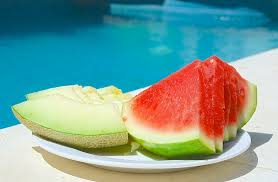
Watermelon is one of my favorite foods because of how useful it is. Whether you slice it, cube it, freeze it, or make a drink from it, watermelon is endlessly delicious. Better yet, it is HEALTHY! Some of it’s good qualities include:
– Natural hydrator by containing 92% water
– Having heart healthy nutrients such as lycopene and citrulline
– An arginine precursor that can decrease body fat and enhance muscle
– Decrease post-exercise muscle soreness
Now that we know that watermelon helps out so much with exercise, lets take a look at swimming as a way to stay healthy. We all know that swimming is a great way to stay in shape. In fact swimming has been shown to reduce death rates in men, as well as decrease blood pressure. But it is not without its own set of risks for orthopedic injuries of the shoulders, knees, and lower back. So here are a few tips to keep those joints feeling good:
– Work on your stroke mechanics, and correct them before you develop pain
– Use traditional rehabilitation exercises as part of your injury prevention program. Target and strengthen the abdominal muscles, rotator cuff muscles, muscles around the shoulder blade, lower back muscles, and quadriceps and hip muscles (see me for details on how)
– When you are experiencing pain, tell some one and ADDRESS IT!!! Don’t fight through the pain. It drives me nuts when my athletes do this.
I hope everyone enjoyed this weeks post! Be sure to check out the NASM blog post about watermelon to get some great recipes, and check out Dr. Geier’s blog for more info about preventing injuries while swimming.