Body By Booz: The Effects Of Alcohol On Your Fitness Goals

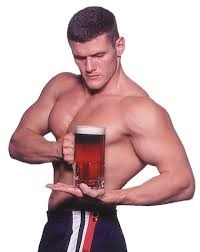
How does doing 12oz curls can influence your fitness and physique? Whether you’re drinking whiskey, wine, or whatever else you use as social lube, we will dive into how it will influence your waistline.

Happy 4th of July! When I think about the celebration of this holiday, images of barbecues, fireworks, and beer dance through my head. I know that I’m certainly not alone when it comes to this way of thinking, which is why I wanted to write about how doing 12oz curls can influence your fitness and physique. So whether you’re drinking whiskey, wine, or whatever else you use as social lube, let’s dive into how it will influence your waistline.
The Basics Of Imbibing
Alcohol comes in many forms, but in general a unit is typically 12 oz (355 mL) of 5% beer, 5 oz (150 mL) 12.5% wine, or 1.5 oz (45 mL) of drinks with a higher (40%) alcohol content. Most of us drink alcohol because it’s a neuroactive chemical that gets us buzzed. But that inebriation comes at a caloric cost that most forget about. That fire water you’re enjoying contains 7 calories per gram energy-wise, but this does not always correlate well with body weight like the other macronutrients (carbs, fats, proteins) do. Finally, as you read the rest of this post it’s important to keep in mind that “moderate” drinking is dependent on gender and not ultimately defined, but an upper limit can be placed at 9 units per week for women and 12-14 units a week for men, with no single event exceeding 4 units.
Beer Nuts & Drunk Munchies
If you’re trying to lose weight, or at least not gain a beer belly, you know that you want to consume fewer calories than you expend. Drinking can certainly influence both aspects, but lets take a closer look at the former aspect of the equation. One important thing to consider when it comes to eating under the influence is that alcohol alters your brain activity along with your hunger hormones. In turn, it can influence what you perceive as tasty. We know that increased calorie consumption is not due to a drunken urge to chow down, but rather it’s due to an increased food-related reward when we taste energy-rich foods… like nachos (1). And remember how calories that come from booze don’t always correlate well with body weight? Well that’s because the calories that you get from alcohol have a large individual variability according to the absolute amount of alcohol consumed, drinking frequency as well as genetic factors. For instance, alcohol calories count more in moderate non-daily consumers than in daily (heavy) consumers as well as counting more in combination with a high-fat diet and in overweight and obese individuals (2). Just another reason why counting your calories can be frustrating. Although binge drinking can cause binge eating, it’s safe to say that exercising in moderation while tossing a few back together with a healthy lifestyle won’t cause weight gain (3).
Obviously, not gaining weight is not enough for most of us. If you want to lose weight then you may want to consider altering your drinking habits. This is because drinking is done in social situations, which leads to social eating, which can lead to poor nutritional choices. You should start by tracking your choices on getting tipsy with a drinking journal. From there, you can address where in your lifestyle you need to make adjustments. For more information on how exactly to go about this, you can listen to or read this wonderful information put you by the folks over at Precision Nutrition.
Ethanol & Exercise
Inline image 3
The key theme and take away from this whole post should be that moderation is key. Drinking a brew or two after exercise every once in a while won’t make you gain weight or lose any benefits you get from the bout of exercise. However, over indulging, especially on a consistent basis, will decrease your overall health and stop progress in its tracks. So have some fun if drinking is your thing, but don’t be an Animal House frat boy. This may be the best way to live life to the fullest.
 
Don’t forget to like me on Facebook!
 
References
1. Yeomans, M. R. (2010). Short term effects of alcohol on appetite in humans. effects of context and restrained eating. Appetite, 55(3), 565-573. doi:10.1016/j.appet.2010.09.005
2. Suter, P. M., & Tremblay, A. (2005). is alcohol consumption a risk factor for weight gain and obesity? Critical Reviews in Clinical Laboratory Sciences, 42(3), 197-227. doi:10.1080/10408360590913542
3. Traversy G, Chaput J-P. Alcohol Consumption and Obesity: An Update. Current Obesity Reports. 2015;4(1):122-130. doi:10.1007/s13679-014-0129-4.
4. Jiménez-Pavón, D., Cervantes-Borunda, M. S., Díaz, L. E., Marcos, A., & Castillo, M. J. (2015). Effects of a moderate intake of beer on markers of hydration after exercise in the heat: A crossover study. Journal of the International Society of Sports Nutrition, 12, 26. doi:10.1186/s12970-015-0088-5
5. Burke, L. M., Collier, G. R., Broad, E. M., Davis, P. G., Martin, D. T., Sanigorski, A. J., & Hargreaves, M. (2003). Effect of alcohol intake on muscle glycogen storage after prolonged exercise. Journal of Applied Physiology, 95(3), 983-990. doi:10.1152/japplphysiol.00115.2003
6. Ebrahim, I., Fenwick, P., Williams, A. J., & Shapiro, C. (2015). Alcohol and sleep review: Sound statistics and valid conclusions. Alcoholism: Clinical and Experimental Research, 39(5), 944-946. doi:10.1111/acer.12708
7. Steiner, J. L., Gordon, B. S., & Lang, C. H. (2015). Moderate alcohol consumption does not impair overload-induced muscle hypertrophy and protein synthesis. Physiological Reports, 3(3), e12333. http://doi.org/10.14814/phy2.12333
8. Duplanty, A. A., Budnar, R. G., Luk, H. Y., Levitt, D. E., Hill, D. W., McFarlin, B. K., … & Vingren, J. L. (2016). Effect of Acute Alcohol Ingestion on Resistance Exercise Induced mTORC1 Signaling in Human Muscle. Journal of strength and conditioning research/National Strength & Conditioning Association.

Stretching The Truth

Today I wanted to talk about what stretching does. There are a lot of misconceptions about the actual effects of stretching are, and I am constantly asked about topic pertaining to stretching. Here are a few commonly asked questions; what should I stretch? how long/often should I stretch? what will stretching do for me? should I even stretch at all? Each one of these questions are important so I will address them one by one.
What should I stretch?
The answer to this is… it depends! There is no need to stretch a muscle that is at an already acceptable level of tonicity. Yes, a hamstring stretch feels nice but for most people the hamstring is not the problem. In many cases the hamstring feels tight because the hip flexors are putting them in a state of constant tension. This problem an even manifest as lower back pain! So, should you stretch the hamstring? No. You should stretch the hip flexors so that the hamstrings are able to get back to a normal resting length. This same situation, where one tight muscle causes another area of the body to have a problem, can happen throughout the entire body. In essence, if you want to know what you need to stretch you should probably take advantage of those free program design sessions to figure out what exactly is going on with your body.
How long/often should I stretch?
There is no definitive answer to these questions. However, a good rule of thumb to go by is stretch for around 30 seconds at least 5 days per week. The best time to stretch is after you’re done working out. “Not in the warm up?” you ask. The answer is no. Stretching the wrong area in the warm up can even be a bad thing in some cases. Like other forms of relaxation, stretching can also be the best thing for you when you feel stressed and anxious.
What will stretching do for me?
Let’s start with the things stretching DOESN’T help with. Stretching will not help with preventing delayed onset muscle sorenessinjury preventionenhancing performancealigning muscle/tendon fiberstrigger points, or increasing muscle length. Wait… what? Stretching does’t increase muscle length? No, but I’ll explain that in a little bit. What you should know is that stretching is good for the heart, the mind, and,most importantly, it’s good for the nerves.
Should I even stretch at all?
The answer is absolutely YES. General whole body stretching is necessary to stay mobile. You need to be able to move, so stretching is a must. Moreover, a targeted stretching program can be used as a way to enhance a workout (think back to the hamstring and hip flexor story). This is why almost all of my clients receive stretching as a part of their corrective exercise strategy.
So at this point you might be asking your self “WTFruit happens when I stretch? I mean won’t it make me more flexible?!?!” Well here’s how it works. We all adapt to the stresses we put on our bodies. In turn, our bodies try to make our life more efficient to those stresses (i.e. our hip flexors become short if we sit for long periods of time every day). This action happens the nerves in the muscles sending signals to the brain on what is a “safe” length for the muscles to be at through the stretch reflex. What stretching does is increase the tolerance, or muscle length until you feel, the stretching sensation. Thus, becoming more flexible through stretching is a result of decreasing the sensation of stretching. It’s the same reason why you need two cups of coffee now even though you used to only need one. Our brain, and our nerves, just need a little more stimulus (whether its stretching or caffeine) to get the same effect as when we first started.
Bottom line. If you want to have the right range of motion, your brain, nerves, and their connection to your muscles, must be in tune. Stretching will help keep homeostasis, but other than that… well, not much else. For more info you can check out the first brief link and more extensive second link.

The Cause Of, And Solution To, Back Pain

There are too many myths about what causes back pain, and far too many treatments for back pain to ignore (most of which are a waste of time and money).

Today I wanted to give a more in-depth look at causes and solutions to lower back pain. I have previously written about this in a more general sense, but I really feel like this topic deserves more attention. There are too many myths about what causes back pain, and far too many treatments for back pain to ignore (most of which are a waste of time and money). So let’s dive into some surprising factors causing pain, and some practical tips on how to deal with it!
Why Do I Hurt?!?!
I’ll start by saying that 80% of people will experience an episode of back pain during their lifetime. So it’s good to know you’re not alone in wondering what’s going on with your back. But the reason behind your back pain is surprisingly complicated. Aside from acute sprains and strains, the exact diagnosis of the root cause of the problem is often never made, or made incorrectly.
Imaging
We know that using techniques such as X-ray and MRI are often ineffective at catching the true problem (1). This is because most people, HEALTHY pain free people, already have some form of disc or spine degeneration (2). This simple fact can be very misleading when doctors are trying to interpret radiographic findings. The only exception to this rule seems to be for SI joint dysfunction, but even that has some major issues (3). Ultimately, this means that there is no evidence that back pain is caused by a bone or joint in the back being out of place, some change in spinal alignment, or your pelvis being out of alignment. . But on the bright side, we know that more pain does not always mean more damage! Here are two great podcasts going over in detail what types of examinations are often used, and which ones actually workONE TWO.
Inline image 1
Back Pain Exacerbates Itself
Often times pain can make someone afraid to move. This is called kinesiophobia and when it comes to back pain it can be terribly detrimental. This is because movement is key to preventing pain and getting your back better! We know that bending and lifting is not a problem, but rather that muscular fatigue during these tasks can be what causes back pain (4). And we know that stress and a lack of sleep can also cause low back pain (5,6). And if you read my previous post on back pain, you will know that sitting too long can cause back pain. So I hope by now you can see how back pain can make itself worse over time, and that it may not be caused by any physical issue that you may already have to begin with.
What To Do About That Back
DON’TS
Because there is generally no specific cause of back pain, there really is no specific way to treat it. However, we do have a good idea of what works and what doesn’t work. Let’s start with what’s on everyone’s minds… the core. Core training, is often the go to fix for back pain because one would think that a stable back/spine is what’s needed to fix a back problem. But as we know the spine is often not the problem so core training (e.g. targeted core training or Pilates) is not the solution (7). We also know that surgery,  orthotics, or focusing on “perfect posture”are not helpful as well. Finally, alternative methods such as massagetrigger point therapyglucosamine, and back crackin don’t work either (8)
DO’S
One great way to address the pain is by not freaking out and going to your doctor right away. The majority of people who experience back pain have their problems go away within 2-6 weeks of it’s onset. Even the dreaded disc herniation goes away on it’s own over time. Exercise your whole body to see the greatest benefits for both back pain and general health. Aside from making sure you have a strong tooshie (gluteus medius), there is no specific form of exercise that works the best but it seems that total body strength training does the trick (9). If you’re not up for that, then WALK!!! Walking has been shown to be just as effective, and walking backwards may even be a better way to go (10).
The key in all of this is to make sure you get a lot of exercise. Because when it comes down to it, it’s the quantity NOT the quality of exercise that you get that will solve your issues (10).
References
1. Chou, R., Qaseem, A., Snow, V., Casey, D., J. Thomas Cross, J., Shekelle, P.. . American Pain Society Low Back Pain Guidelines Panel. (2007). Diagnosis and treatment of low back pain: A joint clinical practice guideline from the american college of physicians and the american pain society. Annals of Internal Medicine, 147(7), 478.
2. Brinjikji, W., Luetmer, P. H., Comstock, B., Bresnahan, B. W., Chen, L. E., Deyo, R. A.. . Jarvik, J. G. (2015). Systematic literature review of imaging features of spinal degeneration in asymptomatic populations. AJNR. American Journal of Neuroradiology, 36(4), 811-816. doi:10.3174/ajnr.A4173
3. Laslett, M. (2008). Evidence-based diagnosis and treatment of the painful sacroiliac joint. The Journal of Manual & Manipulative Therapy, 16(3), 142-152. doi:10.1179/jmt.2008.16.3.142
4. Seyed Hoseinpoor, T., Kahrizi, S., Mobini, B., & Naji, M. (2015). A comparison of abdominal muscle thickness changes after a lifting task in subjects with and without chronic low-back pain. Human Factors: The Journal of Human Factors and Ergonomics Society, 57(2), 208-217. doi:10.1177/0018720814544213
5. Truchon, M., Côté, D., Schmouth, M., Leblond, J., Fillion, L., & Dionne, C. (2010). Validation of an adaptation of the stress process model for predicting low back pain related long-term disability outcomes: A cohort study. Spine, 35(13), 1307. doi:10.1097/BRS.0b013e3181c03d06
6. Alsaadi, S. M., McAuley, J. H., Hush, J. M., Lo, S., Lin, C. C., Williams, C. M., & Maher, C. G. (2014). Poor sleep quality is strongly associated with subsequent pain intensity in patients with acute low back pain: Sleep quality and pain intensity. Arthritis & Rheumatology, 66(5), 1388-1394. doi:10.1002/art.38329
7. Wang, X., Zheng, J., Yu, Z., Bi, X., Lou, S., Liu, J.. . Chen, P. (2012). A meta-analysis of core stability exercise versus general exercise for chronic low back pain. PloS One, 7(12), e52082.
8. Hegedus, E. J., Goode, A., Butler, R. J., & Slaven, E. (2011). The neurophysiological effects of a single session of spinal joint mobilization: Does the effect last? The Journal of Manual & Manipulative Therapy, 19(3), 143-151. doi:10.1179/2042618611Y.0000000003
9. Cooper, N. A., Scavo, K. M., Strickland, K. J., Tipayamongkol, N., Nicholson, J. D., Bewyer, D. C., & Sluka, K. A. (2016). Prevalence of gluteus medius weakness in people with chronic low back pain compared to healthy controls. European Spine Journal, 25(4), 1258-1265. doi:10.1007/s00586-015-4027-6
10. Ferreira, M. L., Smeets, R. J. E. M., Kamper, S. J., Ferreira, P. H., & Machado, L. A. C. (2010). Can we explain heterogeneity among randomized clinical trials of exercise for chronic back pain? A meta-regression analysis of randomized controlled trials. Physical Therapy, 90(10), 1383-1403. doi:10.2522/ptj.20090332

Foam Rollin Rollin Rollin

Foam rolling is a form of self myofascial release (SMR) used on tight muscles. But the question remains… what does foam rolling actually do?!?!

Foam rollers… you see them, you may even use them, but what are they good for? That is the question I am hoping to answer today! Foam rolling is a form of self myofascial release (SMR). I use this modality with many of my clients who have tight muscles and reduced flexibility at specific joints in an effort to get those tight areas to relax before an exercise session. I go through great efforts to identify muscle imbalances in my clients that need SMR, stretching, or conversely, strengthening. But the question remains… what does foam rolling actually do?!?! Well a fantastic review came out recently using 118 research papers. So here is a summary of what is going on with the body when we use SMR techniques, and what it is useful for.
What happens when we foam roll
 
I think it is prudent to first look at what fascia is, because that is the targeted tissue of SMR. Well fascia is complex, but it can be described as force transmission system made up of connective tissue that permeates the human body. Some times tender spots in discrete, taut bands of hardened muscle that produce local and referred pain develop. These are spots are called trigger points. Subsequently, these trigger points are targeted during SMR before or after exercise.
Although we (i.e. the scientific literature) are still not sure on exactly why SMR works, the best evidence points towards a neurophysiological mechanism (like stretch tolerance). This mechanism involves changes in muscle activity acutely, which differs from the way stretching is effective. Other ways SMR may work include lowering tissue pH, releasing inflammatory mediators (reduce inflammation), and re-hydrating the tissue.
What foam rolling is good for
ACUTE (IMMEDIATE) EFFECTS OF FOAM ROLLING ON FLEXIBILITY
SMR causes an increase in short-term flexibility that lasts for >10 minutes. However, it’s not exactly clear how much SMR is needed to achieve this outcome. Unlike stretching, SMR does not affect athletic performance in the short-term. Static stretching, on the other hand, often causes a temporary reduction in muscle performance. Additionally, SMR may decrease soreness and increase pressure pain threshold as a result of DOMS (delayed onset muscle soreness) during the 48 hours following exercise.
CHRONIC (LONG TERM) EFFECTS OF FOAM ROLLING ON FLEXIBILITY
SMR can increase flexibility in a long-term program of >2 weeks with effects similar to traditional stretching programs. Research has also found SMR to improve arterial stiffness, improve vascular endothelial function, reduce cortisol (stress hormone) levels post-exercise, increase parasympathetic activity(high frequency HRV), and reduce sympathetic activity (low frequency HRV). Interestingly, SMR might also improve balance in chronic stroke patients.
Key takeaways 
 
There is a lot of information above but when it comes to YOUR exercise routine, here’s what you need to know. SMR can help with your flexibility immediately after foam rolling for a short time, and will have lasting results when done consistently. It will also help with DOMS so you don’t feel like crying the day after you do squats! Finally, it will tell your brain to release happy hormones so you leave the gym with a big ole smile 🙂
 
For more information, and to learn about the nerdy sciency stuff, you can access the article at the link here.

Snap, Crack, Pop: What Joint Sounds Really Mean

It’s harmless to be a crack addict (e.g. cracking your knuckles), the hazards of trusting others to crack you, and what those other sounds your joints make actually mean.

I cracked my knuckles while at work the other day and a patron looks at me like a mother scolding her toddler and says “You know cracking your knuckles causes arthritis. You wouldn’t want to deal with that down the road now would you?” Being the nice young man that I am, I just smiled and nodded. But I really wanted to explain to her that cracking your own joints is harmless! That’s why I am going to talk about how it’s harmless to be a crack addict (e.g. cracking your knuckles), the hazards of trusting others to crack you, and what those other sounds your joints make actually mean. So prepare yourself for some snappy puns, and let’s get started on this poppin post!
 
Tribonucleation
Tribonucleation is the formation of tiny bubbles between two submerged surfaces when those surfaces are suddenly pulled apart (A.K.A. knuckle cracking). What this means is that during a the cracking process the opposing knuckle joint surfaces resist separation until a critical point where they then separate rapidly creating sustained gas cavities. We know this, due to a very cool study where a person cracked their knuckles during an MRI showing that the cracking is due to cavity inception rather than collapse of a pre-existing bubble (1). In other words, if you want to get your crack on you must generate enough force to overcome tension within the joints (synovial) fluid that keeps the joint tight (not within the soft tissues). This means that you are disrupting the tension forces that keep the joint surfaces together that adds stability to the joint itself (2). This is why you feel nice and loose after a good popping. 
Inline image 1
When it comes to the safety/potential for harm, we know that there is no reason to fret. The old wives’ tale of knuckle cracking causing joint arthritis stems from the thought that the joint collapses during and/or after the force is applied (3). However, we now know for sure that the resting joint orientation is not changed by the cracking event. Furthermore, there is some pretty good research out there showing that cracking your knuckles won’t cause harm (4)… unless it annoys those around you enough for them to cut your fingers off.
Inline image 1
 
What About My Back?!?!
Cracking backs is a practice used by Doctors of Osteopathy, Physical Therapist, and of course Chiropractors. Although the latter of the professions may suggest otherwise, what happens during a back crack is cavitation of a spinal facet joint… same as with the knuckles (5). And what does this “treatment” do? Well it can relieve back pain by taking pressure off sensitive nerves or tissue, increase range of motion, restoring blood flow, reducing muscle tension, and, like more active exercise, promote the release of endorphins within the body to act as natural painkillers. Of course these effects last for about 5 minutes, so a spinal manipulation should be considered one part of a therapy, and not THE therapy (6). Anyone who says otherwise is either lying, or selling you something (The Princess Bride shout out).
 
The Neck
Here’s where things get serious. First of all, we know that cracking the neck is not super beneficial for resolving pain compared to medication (7). Second, we know that neck manipulations come with a rare, but serious, side effects such Cervical Artery Dissection, stroke, and even death (8). I’ll end this brief segment by saying that the risks simply do not justify the reward.
 
Clicking, Crunching, Snapping & The Others
You may notice that not all joints make the same noises. In fact, there are lot’s of sounds that your joints can make, and they can often mean different things. Some common places to experience snapping, clicking, popping, or crunching include the chestshoulderforearmhips, and knees. Of these, the knee is the most common area to experience some form joint sound. Crepitus is the formal term for popping or cracking under the patella (kneecap) and can mean different things depending on where you experience it or feel pain. For instance, a grinding sensation can indicate arthritis, a popping sensation can mean you have loose tissue (plica) getting caught, and a catching feeling could indicate you have a meniscus disorder. Check out this brief video to learn a bit more about what to lookout for if you have questions on how to determine what your knee issue is.
Finally, I would say that the most important factor in deciding what to do about your joint noises is to ask yourself “is this stopping me from doing the things I want to do?” If the answer is NO, then the issue may resolve on its own in time. If the answer is YES, you should seriously consider seeing your Doctor or a Physical Therapist about it.
Don’t forget to like me on Facebook!
 
References
1. Kawchuk, G. N., Fryer, J., Jaremko, J. L., Zeng, H., Rowe, L., & Thompson, R. (2015). Real-time visualization of joint cavitation: E0119470. PLoS One, 10(4) doi:10.1371/journal.pone.0119470
2. ROSTON, J. B., & HAINES, R. W. (1947). Cracking in the metacarpo-phalangeal joint. Journal of Anatomy, 81(Pt 2), 165.
3. Unsworth, A., Dowson, D., & Wright, V. (1971). ‘cracking joints’. A bioengineering study of cavitation in the metacarpophalangeal joint. Annals of the Rheumatic Diseases, 30(4), 348-358. doi:10.1136/ard.30.4.348
4. Deweber, K., Olszewski, M., & Ortolano, R. (2011). Knuckle cracking and hand osteoarthritis. Journal of the American Board of Family Medicine : JABFM, 24(2), 169.
5. Patient positioning and spinal locking for lumbar spine rotation manipulation. (2001). Journal of Osteopathic Medicine, 4(2), 65-65. doi:10.1016/S1443-8461(01)80005-8
6. Hegedus, E. J., Goode, A., Butler, R. J., & Slaven, E. (2011). The neurophysiological effects of a single session of spinal joint mobilization: Does the effect last? The Journal of Manual & Manipulative Therapy, 19(3), 143-151. doi:10.1179/2042618611Y.0000000003
7. Gross, A., Langevin, P., Burnie, S. J., Bédard-Brochu, M., Empey, B., Dugas, E.. . LeBlanc, F. (2015). Manipulation and mobilisation for neck pain contrasted against an inactive control or another active treatment. The Cochrane Database of Systematic Reviews, (9), CD004249.
8. Thomas, L. C., Rivett, D. A., Attia, J. R., & Levi, C. (2015). Risk factors and clinical presentation of cervical arterial dissection: Preliminary results of a prospective case-control study. The Journal of Orthopaedic and Sports Physical Therapy, 45(7), 503.

Back to Basics

Occasionally I forget that not everyone is comfortable with the gym environment. So lets rewind a little bit and focus on the basics of the gym.

Today I wanted to rewind a little bit and focus on the basics of the gym. Occasionally I forget that not everyone is comfortable with the gym environment. I’ll say “go ahead and pick up those dumbbells” to which a client will look at me with a blank stair. With so much equipment around they are left wondering what the heck is a dumbbell?!?! This is only one example of how confusing the gym can often be. So here are some guidelines on what is in thy gym, what its for, and some common courtesy practices that everyone should be utilizing. 
 
Free weights/dumbbells: For all you Cary O2 members, these are the weights in front of the mirrors that range from 5lbs to 130lbs. These weights can be used for a wide variety of exercises and are extremely dynamic. Make sure you start with a low weight when trying a new exercise. Generally you should be able to do 8-12 repetitions with a given weight to keep it safe.
 
Olympic bar/barbell: This tool is commonly thought of when describing the bench press. All of the large barbells in the gym are 45lbs, with the smaller ones ranging in weight. These tools can be use in a wide variety of exercises including squats, lunges, shoulder presses, rows, curls and a whole lot more.
 
Plates and clips: These tools are commonly used with the barbell to increase resistance. The weight plates range from 2.5lbs to 45lbs and are placed in equal amounts on either side of the barbell. For safety reasons you should always secure the plates with clips (they look like springs).
 
Kettlebells: These are the strange looking weights that are scattered around the gym. They look like an iron blob with a handle on the top ranging from 10lbs to 60lbs. Some common exercises done include the kettlebell swing, squat press, or high pull. Just make sure that you are in a safe place where no passers by will get hit when you are performing these exercises.
 
Now lets talk gym etiquette. Etiquette can be a problem wherever you go in life, but at the gym there are few basic rules that we all should abide by.
 
1. Have an idea of what your workout will be so that you don’t end up “hogging” equipment. Spending in hour on the squat rack (or doing exercises like bicep curls on the squat rack) is not cool. There are a lot of people looking to use that equipment so try and keep it short and sweet. This goes for all the equipment. 
 
2. Carry a towel and wipe equipment down before and after use. If Seinfeld taught us anything its that no one likes to use sweaty equipment. At least give it a once over for the next user.
 
3. Put weights (or any equipment used for that matter) back when you’re done. It’s really not that hard to put things back where you found them. I’m sure we have all been in the situation where we couldn’t find what we wanted to use because some Bozo left it across the room. It’s a group effort to make this happen, so feel free to call out perpetrators when you spot them 😉
 
4. It’s OK to share. Going back to the squat rack scenario, if you see someone waiting to use the rack, offer to let them use it while you’re resting between sets. If someone is using the squat rack and you’re waiting on them to finish up, simply ask if it’s cool to work in with them. Not only are most gym goers happy to share, they are often likely to help spot you as well. Not to mention it creates a great way to meet new people and make new friends. This concept, again, goes for any equipment or machine you are using.
 
5. It’s OK to ask. Have you every seen a machine, piece of equipment, exercise, or group class and realize “I have no idea what that is”. Well you’re not alone. There is lot’s to discover at the gym, and it’s always okay to ask a professional. Between the trainers, group instructors, and gym staff, we’ve got you covered. Not to mention we are all friendly and can give you the right advice the first time.

The Good, The Bad, The Ridiculous: Where To Get Health Info

The problem I have with poor information outlets is that at best they are robbing you of your time and money. At worst, they can cause or exacerbate serious injury or illness.

Today I wanted to talk about something that has been on my mind for a while. That, of course, is the issue of where to get proper information about health, wellness, and fitness. It’s not about promoting and individual person or idea. But rather, my objective is to help everyone figure out where to go when they have a specific question. The problem I have with poor information outlets is that at best they are robbing you of your time and money. At worst, they can cause or exacerbate serious injury or illness.
What To Avoid And Why
In the past I have written about challenging our assumptions, particularly when it comes to fitness and wellness products. I hope this message reigns particularly true as you read through this section, because I am sure some of you currently follow some of these resources. So please have an open mind, and if you think I am wrong, then at the very least Google the name of the resource followed by the word “scam” and see what shows up. That being said, let it be known that the following sources have been shown to:
 – Cherry-pick sources that agree with their beliefs while ignoring those that don’t.
 – Not interpreting data within the full context of what is known about a topic.
 – Over-extrapolating study results (like saying that findings from an animal trial apply directly to humans).
 – Citing invalid or uncredible sources (using anecdotes as hard evidence as opposed to peer-reviewed literature)
#1 David Wolfe – I don’t even know where to begin with this guy. The more I read from him, the more I think he must be joking. But when it comes down to it, his “solutions” are just quick “fixes” that don’t actually do anything. He’s #1 on my list because he is so popular. So please stop helping the spread of misinformation if you currently are a follower.
#2 The Food Babe – Her fame is slowly fading, but she is still a great marketer. She’s best known for her ability to be a sensationalist, and scare people into avoiding foods. Her claims don’t even have a shred of research backing them. Her “deadly food” can often be good for you, and “chemicals you cant pronounce” are everywhere.
Inline image 1
#3 Dr. Oz. – To start, there’s actual research showing that the majority of what he says isn’t correct or even wrong (1). He just can’t help but spread poor information. It’s time to say goodbye to the bad doctor.
#4 Dr. Mercola – This fraud is best know for his terrible customer service, fear mongering, and outright lies. That’s all I have to say about that.
#5 Natural News – I saved the best for last because it’s the easiest. Mike Adams and Natural News make claims that can be debunkedthrough a Bing search. You don’t even need Google! Althought their Wikipedia entry is quite entertaining.
 
These are my top 5 but here is the rest of the listAbel James a.k.a The Fat-Burning Man, Andreas Eenfeldt a.k.a The Diet Doctor, Andrew Weil, Barry Sears, Billy DeMoss, Bob Harper, Chris Kresser, Dallas and Melissa Hartwig / The Whole30 / Whole9Life / Healthy Mama, Happy Baby , Dana McDonald a.k.a The Rebel Dietitian, Daniel Amen, Dave Asprey, David Perlmutter, Deepak Chopra, Diane Sanfilippo, Erin Elizabeth a.k.a The Health Nut, Gary Taubes, Gwyneth Paltrow, Jason Fung, Jeffrey Smith, Jillian Michaels, Jimmy Moore, Joel Fuhrman, Jonathan Bailor, Josh Axe, Katie a.k.a Wellness Mama, Kevin Trudeau, Kris Carr, Mark Hyman, Mark Sisson, Nina Teicholz, Oprah Winfrey, Pete Evans, Peter D’Adamo, Robb Wolf, Robert Atkins, Robert Lustig, Sally Fallon Morell, Sarah Wilson, Stephanie Greunke, Suzanne Somers, The Kardashians (All of them), Tim Ferriss, Tim Noakes, Tom Naughton a.k.a Fat Head, Tom O’Bryan, William Davis, Zoë Harcombe
Here’s Where You Should Go
#1 Alan Aragon – A researcher, a writer, and hilarious. Alan Aragon puts out fantastic work and I can’t recommend him enough. Check him out for some nutrition advice!
#2 Brad Schoenfeld – He should be your go to source for muscle building information. The guy puts out more research than I can read! He’s also a very down to Earth writer.
#3 James Fell – If for no other reason, you should follow him for his humor. James fell puts out wonderful information about general health and fitness and is extremely readable.
#4 Examine.com – Examine.com is a third party independent group that evaluates nutritional claims. However, if you want some solid information about that supplement you’re thinking about buying, go to them first and Google second.
#5 Whole Health Source – This is a great place to go if you want to learn some advanced knowledge in a particular area. If you want to go beyond the basics, this is the place to get your information from!
Here is the rest of the list: The ISSN Scoop, StrengTheory, My Sports Science, Body Recomposition, Adel Moussa, Amber Rogers, Armi Legge, Arya Sharma, Asker Jeukendrup, Bill Shrapnel, Brad Dieter, Colby Vorland, Dan Pardi, Danny Lennon, David Despain, Denise Minger, Dr. Spencer Nadolsky, Evelyn Carbsane, James Krieger, Jeff Rothschild, Johan Leech, John Berardi, Jose Antonio, Kamal Patel, Kevin Hall, Kevin C. Klatt, Laurent Bannock, Layne Norton, Lyle McDonald, Maria Brilaki, Martin MacDonald, Menno Henselmans, Michelle a.k.a The Fat Nutritionist, Mike Israetel, Mike Sweeney, Patrick Umphrey, Peter Clark, Rosanne Rust, Seth Yoder, Stephan Guyenet, Steven Novella, Tim Crowe, Yann Le Meur, Yoni Freedhoff
Making your way safely through the internet can be tough. There are loads of people just trying to help, but there are just about as many people who are more concerned about only making money. This is especially true when it comes to nutrition. Only a registered dietitian (RD) can give specific nutrition advice so that should be the gold standard credential you look for when reading about the author. Proper education is important, but when all else fails make sure to check with your personal doctor before making and radical decisions about your health.
References
1. Korownyk, C., Kolber, M. R., McCormack, J., Lam, V., Overbo, K., Cotton, C.. . Allan, G. M. (2014). Televised medical talk shows–what they recommend and the evidence to support their recommendations: A prospective observational study. BMJ (Clinical Research Ed.), 349(dec17 11), g7346-g7346. doi:10.1136/bmj.g7346

Working Out To Justify Junk Food

It can be all to easy to justify a bad habit with a good one. To quote a client “Great workout. Now I can eat that bacon cheese burger later!”

Today I wanted to discuss a common, mind boggling, issue. To quote a client “Great workout. Now I can eat that bacon cheese burger later!” If you have fallen into this trap before I don’t blame you. It can be all to easy to justify a bad habit with a good one. But there are far too many things wrong with this line of thinking to cover it all in one email. So I am going to talk about it purely from a caloric/math point of view with today’s information coming from Suppversity
 
Issue #1
It’s commonly thought that to lose a pound of fat you need to burn 3,500kcal. This concept is fundamentally flawed. Learn more about whyhere
Issue #2
Working harder and doing more repetitions does not always bring greater results when looking at the scale. Learn more about why here.
Issue #3
Exercising more is not going to increase your appetite. So no excuses. Learn more about why here.
 
So what does all of this mean?
 Well basically when we are looking at weight loss, justifying your dietary decisions based on your exercise program is a poor choice. In fact exercise only makes up a small portion of you daily caloric expenditure as compared to the calories you burn just to stay alive. So at its core, the thought that the 300kcal that you burned during your gym session justifies the 800kcal bacon cheese burger (or insert you favorite junk food here), is fundamentally flawed. Now let me be clear here. It’s okay to live life and eat junk once in a while. But to regularly eat garbage because you exercised is a very poor way to go about achieving you goals. It may even make the scale move in the wrong direction.
 
What to do next.
Stick to your healthy eating habits. Don’t deviate away from being a healthy individual because you had a hard day pumping iron. Instead, you should stay consistent with your dietary goals even if you think you “deserve” more. The dark side (fast/junk food) will always be tempting, but achieving you ultimate goal will be so much more satisfying in the end. Finally, you need to stick with an exercise program you like, and try to incorporate both strength cardio training into your program.
 
For more information you can click on the links above or follow the link to the main article bellow. If you need help figuring out what the best course of action is for you, I am always here to help 🙂

Shaking Things Up: A Guide To Periodization (AKA Muscle Confusion)

If you do the same workout all the time, you shouldn’t expect to reach greater exercise outcomes.

Today I wanted to go over workout periodization. This used to be known as muscle confusion, but I really hate that term. That’s because our muscles don’t have brains, and as research rock star Brad Schoenfeld puts it “Periodization is a concept, not a defined training model. It’s simply a way to manipulate training variables (load, volume, frequency, etc) over time to optimize a given fitness outcome while reducing the potential for plateau/overtraining. As such, there are an almost endless number of ways to structure a periodized routine to achieve individual goals.” This means if you do the same workout all the time, you shouldn’t expect to reach greater exercise outcomes. So let’s dive into how to shake things up!
Toolbox
One of the first steps that you can take is knowing different exercises. This means growing your toolbox of exercises! If you just go to the gym and hop on the same machines all the time, you can expect to only get better at what those machines offer. I have written about how to structure a basic exercise routine, and there are plenty of great resources online describing how to exercise. But the bottom line here is that you need to branch out and explore the gym for new ways to get strong.
Basic Breakdown
As mentioned before, shaking things up means changing the load (weight lifted), volume (weight x reps), and frequency (how often you target a muscle group). Whether you know it or not, your goal in shaking things up is to build more muscle. More muscle means more strength, more stability, greater sports performance, and general life performance. In the end this means by shaking things up through proper periodization you are enhancing your longevity. You won’t become huge by lifting weights (unless you put a LOT of effort in), but muscle growth is the ultimate goal for everyone in one way or another!
 
Perfecting Your Periodization
Depending on what your exact goals are, training experience, and current fitness levels, your periodization scheme will vary somewhat. However, here are some recommendations that everyone should follow (1):
All muscle groups should be worked out, including legs, back, abs, chest, shoulders and arms.
Do one set of 8-12 reps for each exercise.
2 hours and 30 minutes each week (total of 150 minutes) of moderate-intensity aerobic activity. That’s the 30 minutes a day Monday through Friday recommendation we’re all so familiar with.
Or, 1 hour and 15 minutes (75 minutes) of vigorous-intensity aerobic activity. That’s about 20 minutes of exercise 3-4 times a week.
Or, a combination of the above that gives you an equivalent result. For example, you can walk briskly for 30 min twice during the week and then jog for 20 min on two other days.
Boring recommendations, but they are a minimum for a reason. If you really want to see improvements, you should try a few different strategies. One great way to see a performance boost is to change up your rep ranges. For instance, lift near-max weight for two to four reps on the first workout day, moderate weight for 8 to 12 reps on the second day, and lightweight for 20 to 30 reps on the third day. By training in this alternating fashion you can see greater strength and muscle growth benefits (2)! To make your workouts easier to track, you can also alternate weights on a weekly or even monthly basis to see similar benefits.
Timing Is Everything
Changing things up is necessary, but there is more to consider. Two big factors are when to change, and when to rest! Rest is important because there is a benefit to instituting regular deload period, where a week of reduced frequency, volume, and/or intensity every month or so to facilitate recuperation and regeneration. But we do know that training a minimum of 2 days a week is needed to maximize muscle growth (3). Check out the table below for a great example of how to schedule your workouts (4).
Inline image 1
Changing your sets, reps, and frequency schemes will bring you results. So if you haven’t figured it out yet, tracking your workouts is extremely important. None of this information will be very useful if you don’t know how much volume you’re lifting per muscle group. So get yourself an exercise journal, or create an Excel spreadsheet to see the gains and avoid injury. Because even though you may have the secret to the building big arms, you won’t be able to know if you’re doing it right unless you write it down!

Breaking Bad

Today we’re talking about breaking bad… habits.

Today we’re talking about breaking bad… habits. Because I am a huge KISS fan (keep it super simple), I really enjoyed reading the article published by My Fitness Pal. It talks about bad habits that can bugger up the works when it comes to your healthy lifestyle and nutrition. So lets take a look at the bad habits.
 
Bad Habit #1 Skipping the Grocery Store
We all know that eating out is almost always less healthy than making food for yourself. So make sure you have something to cook with by regularly going to the grocery store. If you like to save time, it is much easier to get in and out quickly if you go early in the day.
 
Bad Habit #2 Sleep Hygiene 
Want to get more done in your day, feel more energized, and able to take on the world? Well sleep should be one of your primary tools to do so. That cup of coffee wont do much if you’re regularly under sleeping. Practice some sleep hygiene and you will see a world of difference!
Bad Habit #3 Pantry Dropper
Dropping the ball on having your pantry stocked with good food is never a good thing. This poor habit plays into grocery shopping. Something is bound to happen to keep you from getting to the grocery store, so having a stocked pantry is a good way to not order junk food straight to your door. It can also pay off to freeze some fresh veggies and meats for the days you need to dig into your stash of quality food.
Bad Habit #4 Selecting Veggies
Eating old and out of season food can leave a bad taste in your mouth. So one solution is to make sure you’re buying fresh in season food that you will be getting at its ripest. Practicing this will make you happy to eat those vegetables and not dread it. Don’t know where to start? I recommend you check out our state farmers market that’s open year round. The vendors are always happy to educate and help you learn whats the best to eat this time of year.
Bad Habit #5 Kitchen Hygiene 
This is the bad habit I am most guilty of. This habit requires you to clean your kitchen frequently and thoroughly. However, I have to admit that doing the dishes quickly does result in less time/money wasted on ordering out food. Having a clean kitchen requires about 30m of work per day, but can save you hundreds (or more if bugs become a problem) of dollars per month overall.
Bad Habit #6 Over-exercising
Over exercising can cause anything from injuries to over eating at meal time. Keeping your exercise routine to a healthy work load can go a long way in keeping you sane and satisfied.
For more information on these topics, check out the link bellow. If you have any questions about what you can do to avoid these habits I’m always here to help!